Waterline Chimneys: Smoke from Residential Narrowboats and the Rights of Nearby Residents
Smoke on the water, smoke in the home
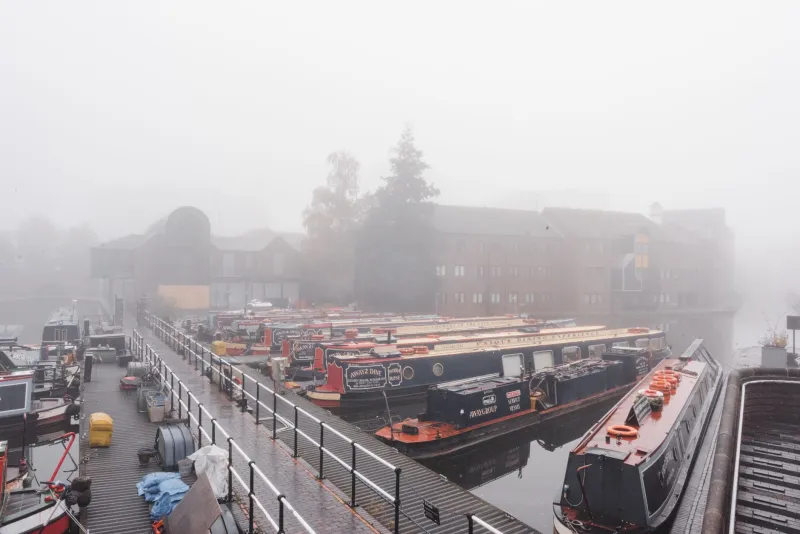
Residential moorings and marinas are a familiar feature of many UK waterways. They provide homes afloat and support local economies. They can also place a solid-fuel stove, often with a short flue, within a few metres of houses, flats and other moored vessels. When the wind is wrong, smoke, soot and odour can become a persistent problem for people living nearby.
The legal principles are broadly familiar. No one is entitled to use their property in a way that causes a substantial and unreasonable interference with a neighbour’s use and enjoyment of their own. But the practical questions are different when the source is a narrowboat stove rather than a brick chimney. The route to resolution usually involves the boat owner, the marina operator and, where necessary, the local authority environmental health team.
Why boat stove smoke is different from a household chimney
A house chimney is normally fixed, subject to building control requirements and positioned above the roofline. A narrowboat flue is often lower, closer to neighbouring windows and capable of being moved when the boat moves. Boats may be occupied intermittently, and stove use may be concentrated in the evening or early morning. In a marina, several vessels may burn solid fuel within a small area, making it harder to identify a single source.
Fuel choice matters. Dry, well-seasoned wood and approved smokeless fuels generally produce less visible smoke than damp wood, household waste or unsuitable coal. Stove condition also matters: a poorly maintained appliance, a slumbering stove or a flue that is too short can increase emissions at low level.
Smoke control areas under the Clean Air Act 1993 add a further layer. The rules can apply differently depending on the vessel, the mooring and the fuel used. A local authority environmental health officer is best placed to explain how the regime applies to a particular location. Smoke control area rules and statutory nuisance are separate mechanisms, and one does not automatically replace the other.
Building a record that will be taken seriously
Complaints about smoke are often weakened by vague descriptions. A contemporaneous log is more useful. Record the date, time, duration and wind direction. Note whether windows were open, washing was affected, or rooms became unpleasant to use. Photographs and short videos with timestamps can show visible smoke, soot deposits or the proximity of the flue to your property. Do not trespass or put yourself at risk to obtain evidence.
Low-cost air quality monitors can provide useful context, particularly for fine particulate matter. They are not equivalent to professional reference instruments, and readings should be presented as supporting evidence rather than proof of harm. Keep the monitor’s location, calibration information and any limitations in mind. If you have incurred cleaning costs, medical expenses or other losses, retain receipts and a clear explanation of why the expense arose.
It also helps to ask the marina operator for its berth terms and environmental rules. These may cover fuel types, chimney height, stove use or dispute procedures. A polite written request is usually better than an accusatory one. Keep copies of all correspondence, including responses from the boat owner and the marina.
Who to approach, and in what order
The first step is usually a calm written approach to the boat owner. Explain the effect on your home, give specific examples and ask whether practical changes are possible. Suggested measures might include raising the flue, using drier fuel or approved smokeless fuel, avoiding slumbering the stove overnight, or changing the times of use. Many disputes can be reduced at this stage, particularly where the owner had not realised the smoke was affecting a neighbour.
If that does not work, contact the marina operator. Marina contracts and berth conditions may give the operator authority to require changes, and operators often prefer mediation to formal complaints. Ask what complaints procedure exists and whether the matter can be recorded formally.
Next is the local authority. Environmental health teams investigate statutory nuisances under the Environmental Protection Act 1990. They can assess whether smoke is prejudicial to health or a nuisance, and they may serve an abatement notice requiring action. They also enforce smoke control area rules where applicable. Councils have limited resources and may prioritise persistent or widespread problems, so a clear evidence log and a measured account of the impact will help.
A civil claim is a further option. A nuisance claim can seek damages and, in some cases, an injunction. The court will consider the character of the area, the duration and frequency of the interference, and whether the defendant has taken reasonable steps to avoid it. Legal costs and the stress of litigation mean that civil action is usually a last resort. Mediation should be considered before proceedings.
What compensation and abatement realistically look like
A statutory nuisance complaint is primarily about stopping or reducing the problem. It does not automatically produce compensation for the complainant. If a council serves an abatement notice and the matter proceeds to prosecution, any fine is imposed by the court and is not a personal compensation award.
A civil nuisance claim can include damages for loss of enjoyment of home, cleaning costs and other financial losses. Awards vary widely and are often modest unless the interference is severe and prolonged. An injunction may require the boat owner to alter the stove, flue or fuel use. The risk of legal costs is significant, so specialist advice is important before issuing proceedings.
In practice, the most common outcomes are practical abatement measures: a taller flue, a change of fuel, better stove maintenance, restrictions on burning times or relocation of the vessel within the marina. These are less confrontational and often quicker than court action.
A practical way forward in 2026
Waterfront living depends on reasonable give and take. A written record, a polite first approach and a willingness to discuss practical solutions remain the most effective starting points. Where smoke continues to cause a substantial interference, the local authority and, ultimately, the civil courts provide formal routes. The key is to document the problem clearly, identify the responsible party accurately and seek advice before taking the most costly steps.