Standing Trains, Settling Fumes: Railway Diesel Idling and Compensation in 2026
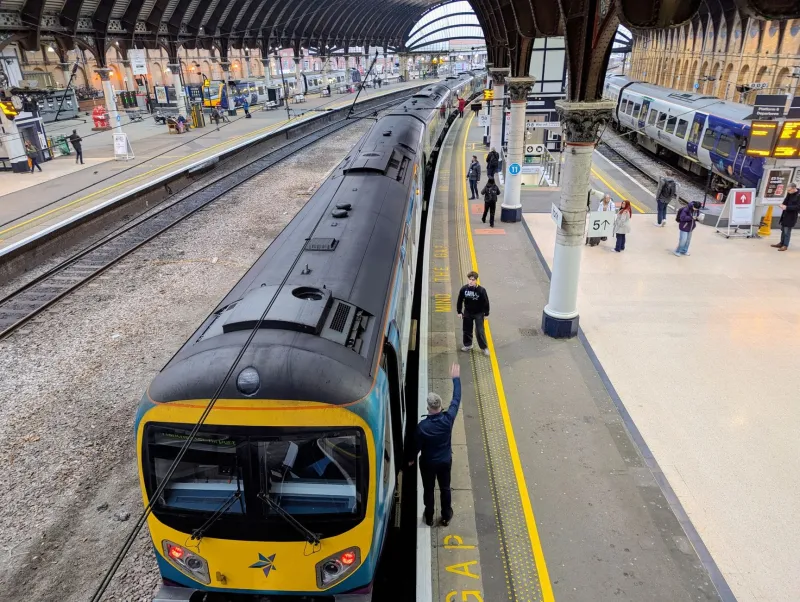
Residents living beside railway stations, sidings and freight yards often describe a particular pattern: a diesel train arrives, waits, and keeps its engine running. The fumes may be intermittent, weather-dependent and difficult to capture, but they can be persistent enough to affect sleep, ventilation and the use of gardens. For UK households considering a claim, the practical question is not simply whether diesel exhaust is unpleasant. It is whether the idling amounts to a legally recognised interference and whether a realistic remedy exists.
Why idling diesel trains attract complaints
Diesel locomotives and multiple units can idle for operational reasons: waiting for a platform, crew changes, signal regulation, heating or cooling, or freight path availability. At stations and depots close to housing, the emissions can be concentrated by buildings, still air and low-level discharge. Residents may notice a metallic or oily odour, visible haze, throat irritation and a persistent low-frequency engine note. Nitrogen oxides and fine particulate matter are the pollutants most often associated with diesel exhaust, but a complaint does not need scientific proof of a specific health effect to be taken seriously by a council or operator.
The key issue is usually duration and frequency. A train that idles for a few minutes is one thing; a locomotive that runs for hours beside a bedroom window is another. Weather matters too. Complaints often spike on still, cold mornings or during temperature inversions, when fumes linger at ground level rather than dispersing.
What the law can and cannot do
In England, Wales and Scotland, local authorities have powers and duties relating to statutory nuisance under the Environmental Protection Act 1990 and equivalent Scottish legislation. Fumes, gases, dust and odour can, in principle, form part of a statutory nuisance. A council environmental health team can investigate and, if satisfied that a nuisance exists or is likely to recur, serve an abatement notice. Breach of such a notice can lead to prosecution.
That does not mean a council will automatically act against a railway operator. The operator may raise operational constraints, statutory powers or a 'best practicable means' defence depending on the circumstances. Railway sites can also involve several responsible parties: the station operator, the train operating company, a freight operator, and Network Rail as infrastructure manager. Establishing who controls the idling is therefore part of the evidential work.
Private nuisance is the other main civil route. A household would need to show an unreasonable and substantial interference with the use and enjoyment of land, taking account of locality, duration, frequency and sensitivity. A civil court can award damages or an injunction, but litigation is expensive and the outcome is not guaranteed. 'Coming to the nuisance' is not usually a complete defence, but it can affect how a case is perceived.
Build a record that stands up
A useful record is chronological, specific and proportionate. Note the date, start and end time, location of the train, whether the engine was idling or moving, and the weather conditions, especially wind direction and still air. Record what you experienced: odour, visible smoke or haze, irritation, noise, and whether windows had to be closed. Photographs and short videos with timestamps can help, provided they are taken from your own property or public land without trespassing or confronting staff.
A simple diary is often more persuasive than a scatter of isolated complaints. Ask neighbours whether they have noticed the same pattern and whether they are willing to keep their own logs. Low-cost air-quality monitors can provide useful context, but they should not be presented as definitive proof of harm or of the source. Council officers and courts are more likely to rely on consistent witness evidence, operator records and professional monitoring where it exists.
Complain to the right people, in the right order
Start with the operator and Network Rail. Ask for the company's environmental or community relations team and request its policy on engine idling at the location. Provide your log rather than a general complaint. If the idling involves freight, identify the freight operator as well as the station operator. Keep copies of correspondence and note response times.
If the pattern continues, contact the local authority environmental health department. Ask for a nuisance investigation under the Environmental Protection Act 1990 and provide your evidence in a clear bundle. Councils are more likely to act where several households report the same issue and where the log shows frequency and duration. You can also raise the matter with your local councillor or MP, particularly where a station or depot is subject to planned changes or expansion.
The Rail Ombudsman is generally concerned with passenger disputes, so residents should not assume it is the correct route for environmental complaints. The Office of Rail and Road regulates safety and industry performance, but it does not normally award compensation to individual households for nuisance.
Where compensation may, or may not, arise
Statutory nuisance action is primarily about stopping or reducing the problem, not about paying householders. A council abatement notice does not usually produce a compensation cheque. If the council fails to act, there may be a route of complaint through the local government ombudsman, but that is about administrative failure rather than direct compensation for fumes.
Civil claims are different. A private nuisance claim can, in principle, lead to damages for loss of amenity and possibly an injunction. Personal injury claims require medical evidence and proof that the exposure caused or materially contributed to the condition. Property damage claims are rare in this context and usually need specific evidence. Group claims are possible, but they bring coordination and costs risks. Any household considering litigation should take independent legal advice and check limitation periods promptly; in England and Wales, nuisance claims are generally subject to a six-year limit, while personal injury claims usually have a three-year limit. Scotland has its own rules.
A realistic approach for 2026
The most effective first step is not a claim form but a well-documented complaint that identifies the operator, the location and the pattern. Ask for idling policies, request a council nuisance investigation where the evidence supports it, and keep the pressure steady rather than episodic. Compensation may be available in a strong civil case, but it is not automatic and should not be assumed. For most residents, the immediate aim is a change in operating practice: shorter idling, better positioning, or agreed limits at the boundary. That outcome is often more achievable, and more valuable, than a speculative damages claim.