Humming at the Boundary: Heat Pump Noise, Refrigerant Leaks and Neighbour Disputes in 2026
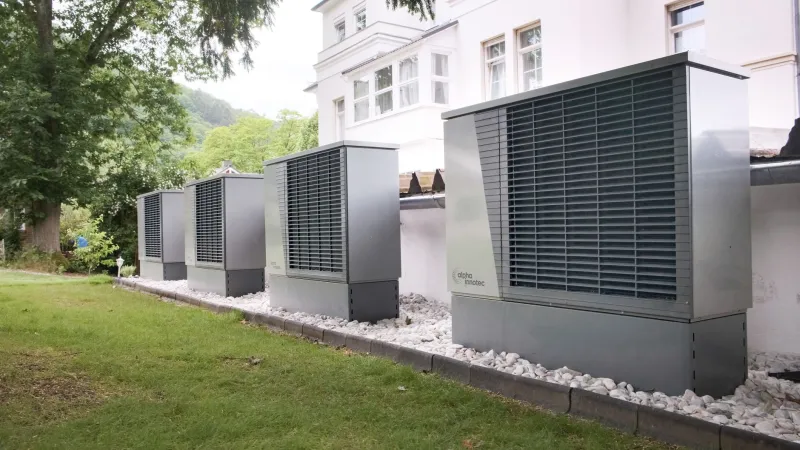
Heat pumps are central to the UK’s decarbonisation strategy, and most installations pass without complaint. Yet as more units appear on densely packed streets and retrofit schemes accelerate in 2026, a small but growing number of neighbours are finding themselves on the receiving end of a persistent low hum, a vibration that travels through walls, or — more rarely — a refrigerant leak near a boundary. The result is an awkward tension: a technology promoted as environmentally responsible can, in the wrong circumstances, become an environmental nuisance.
This article sets out how UK law treats those complaints, what evidence is worth collecting and what remedies are realistically available. It is not an argument against heat pumps. It is a guide to resolving the minority of cases where good intentions and poor siting collide.
Why heat pump disputes are becoming more common
The UK housing stock is old, dense and increasingly retrofitted. Air source heat pumps need outdoor space for the condenser unit, and that space is often a narrow side return, a flat roof or a wall close to a neighbouring window. When a unit is undersized, poorly mounted or positioned without regard to acoustics, the resulting noise can be more noticeable than the installer expected.
The problem is rarely a loud mechanical roar. It is usually a low-frequency fan hum, a tonal quality that some people find harder to ignore than higher-pitched sound, or a vibration transmitted through a shared wall or joist. In quiet residential areas — especially at night — even a relatively modest sound can become intrusive.
When does noise become a statutory nuisance?
In England, Wales and Scotland, local authorities have a duty to investigate complaints of statutory nuisance under the Environmental Protection Act 1990. Noise from a domestic heat pump can, in principle, amount to a statutory nuisance if it is unreasonable and substantial and interferes with the use or enjoyment of a neighbour’s property.
That is a high bar. Environmental health officers will consider the character of the area, the duration and frequency of the noise, the time of day, and whether the complainant is unusually sensitive. A faint hum audible only in a silent bedroom at 2am is not automatically a nuisance; a constant drone that prevents sleep and dominates a garden may be.
Low-frequency noise is a particular challenge. Standard sound level meters can understate its impact, and the human ear is often more sensitive to it than the numbers suggest. Cases have turned on expert acoustic evidence showing tonal components or vibration that ordinary decibel readings miss.
Planning conditions and the MCS 020 noise standard
Many air source heat pumps are installed under permitted development rights, but those rights are conditional. In England, the conditions include compliance with the MCS 020 planning standard for noise, which assesses whether the unit will exceed a specified noise level at the nearest neighbouring window. Similar approaches apply elsewhere in the UK, though the detailed rules differ.
If an installation cannot meet the relevant noise condition, planning permission may be required. A neighbour who suspects a breach can ask the local planning authority to investigate. However, planning enforcement is not a compensation route: it may lead to a requirement to move or acoustically screen the unit, but it does not automatically produce a payment.
It is worth noting that planning compliance and statutory nuisance are separate tests. A unit can comply with MCS 020 on paper and still generate a nuisance in practice, particularly where installation quality, vibration isolation or maintenance is poor.
Refrigerant leaks: rare but not trivial
Refrigerant leaks from domestic heat pumps are uncommon, but they do happen. Modern units typically use refrigerants such as R32 or, increasingly, R290 (propane). A leak may be odourless or faintly detectable, and in a confined space it can displace oxygen or, in the case of flammable refrigerants, present a fire risk.
For most neighbours, the health risk from a small domestic leak is low. The more practical concerns are environmental (some refrigerants are potent greenhouse gases) and contractual (the installer or manufacturer may be responsible for repair under warranty or the F-gas regulations). If a leak is suspected, the correct first step is to contact the installer or a suitably qualified F-gas engineer — not to attempt a DIY repair.
A leak becomes a legal issue for a neighbour mainly if it causes actual damage, a demonstrable health impact or a persistent nuisance. In those circumstances, a civil claim in negligence or nuisance may be possible, but such claims are fact-specific and rarely straightforward.
Evidence that actually helps
Affected neighbours often gather too much anecdotal material and too little structured evidence. A useful file should include:
- A dated diary recording when the noise or vibration occurs, how long it lasts and what it prevents you from doing.
- Short video recordings with a visible timestamp, ideally showing the unit and the neighbouring boundary.
- Correspondence with the neighbour and installer, kept civil and factual.
- Copies of any planning permission, prior approval or MCS 020 assessment.
- Notes on weather conditions, since wind direction and temperature affect how sound travels.
- A professional acoustic assessment if the problem is persistent. This costs money, but it carries far more weight with a local authority or court than a smartphone sound app.
Low-cost monitors can support a diary, but they are not a substitute for calibrated measurement. Environmental health officers will usually conduct their own assessment.
What remediation and compensation look like
Most heat pump disputes are resolved without litigation. Practical remedies include repositioning the unit, fitting anti-vibration mounts, installing an acoustic enclosure, servicing the fan or compressor, or adjusting operating schedules to avoid night-time noise.
If a local authority serves an abatement notice and the nuisance continues, the neighbour can face prosecution. In civil proceedings, a claim in nuisance could lead to an injunction requiring remedial work and, in some cases, modest damages for loss of amenity. Compensation is rarely large unless there is proven property damage or measurable health impact, and costs risk can be significant.
A sensible first step is a calm conversation, followed by mediation if needed. Local authority environmental health teams can often broker solutions. The aim should be a functioning low-carbon heating system that does not impose unreasonable costs on the neighbour — not a premature rip-out or a punitive claim.
A proportionate approach
Heat pumps are not going away, and nor should they. But the transition to low-carbon heating will only hold public confidence if installations are sited and maintained with neighbours in mind. For the minority of residents who find themselves living next to a poorly installed unit, the law offers routes to abatement and, occasionally, compensation. Those routes work best when evidence is clear, expectations are realistic and the response is proportionate.