Vapour Through the Wall: Vape Shop Aerosol and Neighbour Claims in 2026
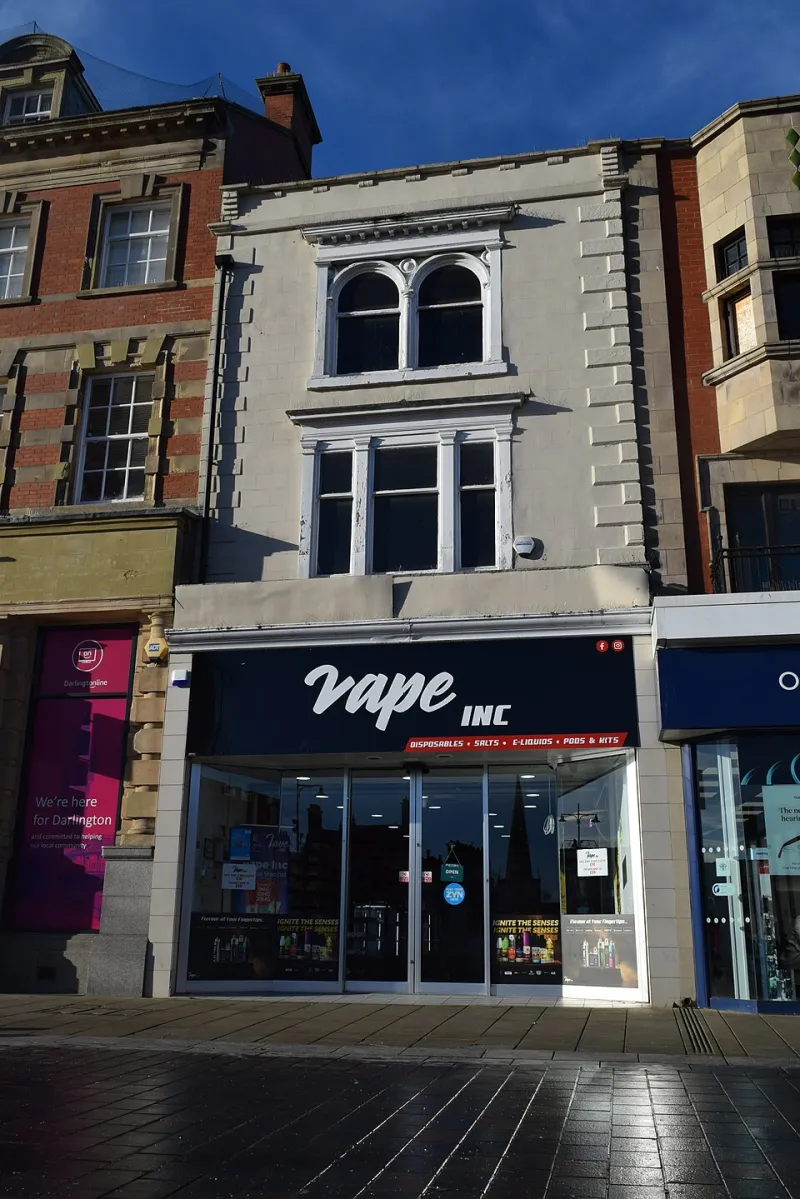
Photo: Mtaylor848, CC BY-SA 4.0, via Wikimedia Commons
Retail vaping has settled into the UK high street, and with it a new kind of neighbour dispute. A shop fronts onto the pavement; above it sits a flat, behind it a yard, beside it a shared entrance hall. The aerosol produced by testing devices, customer use and staff sampling does not behave like tobacco smoke, and the law does not treat it like tobacco smoke either. That gap is where most complaints founder.
Not smoke, but not nothing
The smoke-free legislation that governs indoor smoking does not extend to vaping, so a shop permitting indoor use is not automatically breaching tobacco control rules. Equally, an absence of smoke does not mean an absence of legal interest. Vapour is an aerosol carrying propylene glycol, glycerol, flavour compounds and, where nicotine is present, nicotine. In an enclosed stairwell or a flat with windows overlooking an extraction grille, the practical effects — a persistent sweet odour, a film on glass, irritation for occupants with asthma or sensitivities — can be real and repeatable.
The legal question is not whether the smell is unpleasant. It is whether the emissions are prejudicial to health or amount to a nuisance.
The two legal routes
Most complaints sit under one of two headings.
Statutory nuisance. Under section 79 of the Environmental Protection Act 1990, local authorities have a duty to investigate complaints of, among other matters, smoke, fumes, gases and smell emitted from premises so as to be prejudicial to health or a nuisance. For trade premises, the category expressly includes dust, steam and other effluvia. A council that is satisfied nuisance exists must serve an abatement notice.
Private nuisance. Separately, an occupier can pursue a civil claim where emissions unreasonably interfere with the use and enjoyment of their home. This is a balancing exercise: duration, frequency, intensity, the character of the locality, and whether the interference is more than trivial all feature.
Neither route is concerned with taste. A neighbour who simply dislikes the scent of mango e-liquid has a preference, not a cause of action. A neighbour whose front room fills with aerosol every afternoon for two hours, whose child's asthma has worsened, or who cannot open windows without a visible haze has the beginnings of a case.
Evidence that survives scrutiny
Environmental health officers are overworked and sceptical, and civil claims turn on documentary proof. What tends to carry weight:
- A contemporaneous diary recording date, time, duration, weather, wind direction and effect on the property, kept for at least four to six weeks.
- Photographs and short videos showing visible haze, residue on surfaces, or the position of extraction outlets relative to windows and doors.
- Floor plans or a simple sketch marking where ducting terminates and where habitable rooms sit.
- Statements from other affected occupiers, particularly in a shared building.
- Medical evidence where health effects are alleged — GP letters or consultant reports, not self-diagnosis.
- Records of mitigation costs: air purifiers, replacement filters, draught-proofing, glazing works.
Low-cost air quality monitors can be useful corroboration but should be treated cautiously. Consumer sensors are poor at identifying the source of a reading, and a spike in volatile organic compounds may have several explanations in a domestic setting. Present monitor data as supporting context, never as the whole case.
The building, the lease and the landlord
Where the shop and the flat share a freeholder, the lease is often the fastest lever. Standard commercial leases contain covenants not to cause nuisance to other occupiers, and residential leases usually contain similar obligations. A letter to the managing agent setting out the specific interference, with the diary attached, frequently produces practical changes — revised extraction, filters, door closers, restricted sampling hours — long before any regulator is involved.
Building services matter too. Ventilation systems should be designed so that discharge does not re-enter neighbouring premises, and a system installed without regard to the position of adjacent windows may fall short of what the Building Regulations expect. Freeholders are also bound by the general duty of care in the Defective Premises Act and by health and safety obligations in respect of common parts.
Planning conditions: read the permission
Many vape shops occupy premises within the broad retail use class, which limits the planning authority's interest in day-to-day operations. But some permissions carry conditions on extraction equipment, opening hours or the discharge point for fumes. If the outlet visible from your window was never approved, or the equipment has been changed since consent, that is a planning enforcement matter and belongs with the local planning authority rather than environmental health. Two separate departments, two separate routes.
Working with environmental health
Ask the council to treat the matter formally and request their standard diary sheets, which are designed to be evidence rather than anecdote. Keep the tone factual. Officers respond better to a folder of dated observations than to a long account of grievance.
If an abatement notice follows, the recipient has 21 days to appeal to the magistrates' court. If the council declines to act, a resident may in some circumstances bring a private action under section 82 of the 1990 Act after giving notice to the authority, and the magistrates' court can order abatement and award compensation for loss suffered, subject to a statutory ceiling of £5,000.
What a complaint can actually achieve
Realistically: changes to extraction and operating practice, restrictions on indoor sampling, and modest compensation for proved loss. Statutory nuisance awards are usually measured in hundreds or low thousands of pounds, not headline sums. Cases collapse where the evidence shows intermittent, faint or subjectively perceived emissions, or where the shop has taken reasonable steps to control them.
Two final points. Limitation periods apply: six years for nuisance claims generally, three years where personal injury is alleged. And nothing in this area is improved by delay — the diary you start today is worth more than the one you wish you had kept last summer.