When the Pit Comes Closer: Quarry Dust, Blasting and Compensation in 2026
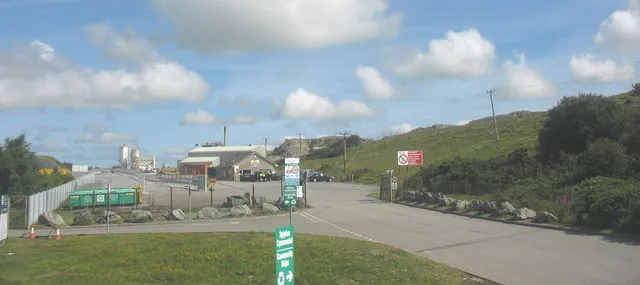
Photo: Eric Jones, CC BY-SA 2.0, via Wikimedia Commons
A quarry is not a nuisance in itself. It is a lawful industrial use, usually established before the surrounding houses were built, and the law has long accepted that mineral extraction must happen somewhere. That does not leave neighbours without rights. It does mean the route to a remedy runs through evidence, regulation and — where it is justified — a carefully framed civil claim rather than a general complaint about dust.
Three sources, three problems
Residents tend to describe 'dust from the quarry' as a single issue. Regulators treat it as at least three.
- Blasting. Controlled explosions fragment rock. The visible dust cloud is only part of the story; the associated vibration and air overpressure are measured separately and governed by conditions rather than nuisance law alone.
- Crushing and screening. Mechanical processing generates fine particulate matter, particularly in dry, windy conditions. This is where most day-to-day complaints originate.
- Haul roads and site traffic. Unsealed internal roads, wheel wash failures and spillage onto the public highway produce both airborne dust and deposited grit on vehicles, windowsills and washing lines.
Each has a different control regime and a different evidential signature, so a complaint that bundles them together is harder to investigate.
The two regulators, and which one you need
The mineral planning authority — normally the county or unitary council — controls the planning permission under which the site operates. Conditions typically address hours of operation, dust suppression, wheel cleaning, road sheeting, monitoring and, for blasting, limits on vibration and times of detonation. Breach of a condition is a planning enforcement matter.
The environmental regulator — the Environment Agency in England, Natural Resources Wales, SEPA or NIEA elsewhere — issues environmental permits for certain installations and for waste operations, and can take action on pollution incidents.
The district or borough council retains its statutory nuisance role under the Environmental Protection Act 1990. In practice, this is where most neighbours start, and it is often where they are redirected, because a quarry operating in accordance with a valid permission raises questions that nuisance law alone does not settle.
Planning conditions are not decoration
Ask the planning authority for the site's permission, all conditions and any approved dust management scheme. These documents are public. Read them against what you observe.
If a condition requires damping of haul roads during dry weather and the road is visibly dry at midday in July, that is a specific, checkable allegation. If blasting is permitted only between specified hours and you have recorded detonations outside them, that is likewise specific. Vague assertions that the operator 'does not care' will be filed and forgotten; a note reading 'Condition 14 breach, wheel wash inactive, 14.20 on 3 August, photographs attached' will not.
Constructing an evidence record
A defensible file normally contains the following:
- A dust diary covering at least six to eight weeks, recording time, wind direction, activity on site, and the effect on your property. Note whether visible plumes cross the boundary.
- Deposition evidence. Photograph window ledges, garden furniture and vehicle surfaces, ideally with a dated reference point and, if possible, clean control surfaces for comparison.
- Blast records. Log date, time and felt effects. Ask the authority whether the operator submits vibration monitoring results as a condition requirement; where they do, discrepancies between reported levels and your experience are worth raising.
- Health records where respiratory effects are alleged, supported by GP or specialist correspondence.
- Damage evidence. Cracks in render or plaster should be photographed with a scale, dated, and — critically — surveyed by a qualified structural engineer rather than assessed by eye.
- Costs. Cleaning, car washing, replacement filters, redecorating.
Property damage versus nuisance
These are distinct claims and they fail in different ways.
A nuisance claim concerns unreasonable interference with the use and enjoyment of your home. Deposit of dust on property, inability to open windows, and interference with garden use can all support it.
A property damage claim, typically in negligence or nuisance, requires proof that the operator's activities caused the specific damage alleged. This is where most claims collapse. Cracking in a 1930s cottage may have several causes, and vibration from blasting is often blamed for damage that predates it. An engineer's report distinguishing pre-existing movement from new cracking is expensive and sometimes inconclusive; claimants should weigh that cost honestly before proceeding.
The best practicable means defence
Section 80(7) of the Environmental Protection Act 1990 provides a defence of best practicable means for nuisance arising from trade or business premises. In practice, a quarry that can demonstrate water bowsers, sealed surfaces where feasible, wheel washes, speed limits, covered conveyors, monitoring and prompt complaint handling may escape an abatement notice even where dust is demonstrably escaping.
This is why the planning regime often matters more than the nuisance regime. Planning conditions impose absolute requirements; nuisance law asks what is reasonable.
Timescales and practicalities
Civil nuisance claims are ordinarily subject to a six-year limitation period, running from the date of the damage or, in continuing nuisance, from each occurrence. Personal injury claims carry a three-year limit. Blasting and dust claims are fact-heavy and rarely swift; a case that proceeds to a full hearing may take two years or more.
Before instructing solicitors, consider a collective approach. Where a dozen households share the same complaint, a single well-prepared submission to the planning authority, backed by consistent diaries from several properties, carries considerably more weight than a dozen isolated letters. Group claims also spread the cost of expert evidence, which is usually the decisive factor in whether a case is viable at all.
The honest assessment
Compensation is achievable where there is a documented breach, demonstrable loss and, ideally, corroboration from more than one household. It is rarely achievable on the basis of occasional visible dust alone. The strongest position belongs to the neighbour who has read the permission, kept the diary and complained in writing, in sequence, to the right body each time.